Running Away, Running True
Regret wants to edit the past selectively. But if I pulled too many threads out of my life, I might also lose the part that matters most.
I think about regrets a lot.
Not in some grand courtroom-of-the-soul way. More in the ordinary old-man way, where you look back and see how a few small decisions became bigger ones, and the bigger ones slowly hardened into a life.
A job taken.
A job left.
A relationship held onto too long, or not long enough.
A move made earlier, later, or not at all.
A few degrees one way or the other, and maybe I don’t end up here.
But I would not trade here away.
Because here means Raven and Xander.
Not children in the abstract. These children. These two ridiculous, impossible, perfect little people who showed up late enough in my life to make me rethink the whole story.
They were not part of some clean master plan. They were not the tidy result of careful ambition and good timing. They were a disguised gift. An old dad’s gift.
That is what makes regret so slippery.
Regret wants to edit the past selectively. It wants to remove the bad judgment, the dumb exits, the wasted time, the pain. But it rarely admits that if you start pulling on those threads, you may also unravel the parts of your life you would now protect at all costs.
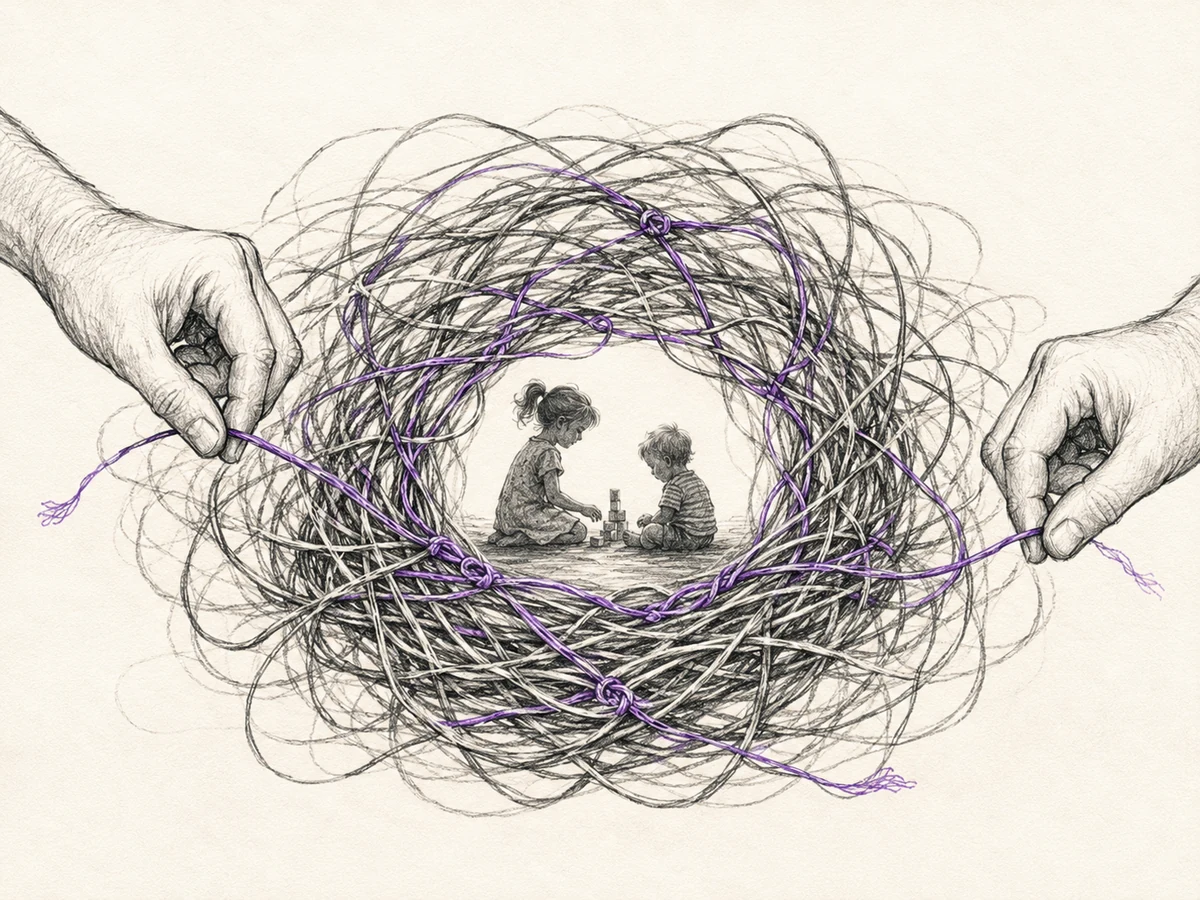
So no, I don’t believe in “no regrets.”
I have regrets. Plenty of them.
But I also know that if too many things had gone too differently, I might have ended up with a life that looked cleaner on paper and felt less like mine.
Years ago, when I was leaving Andersen Consulting, the HR manager doing my exit interview asked what I was going to do next.
I told him the truth: I didn’t really know.
I just knew what I wasn’t going to keep doing.
He had the calm compassion of an uncle or a trusted advisor. No judgment in it. He said he had found it was better to run toward something than away from something.
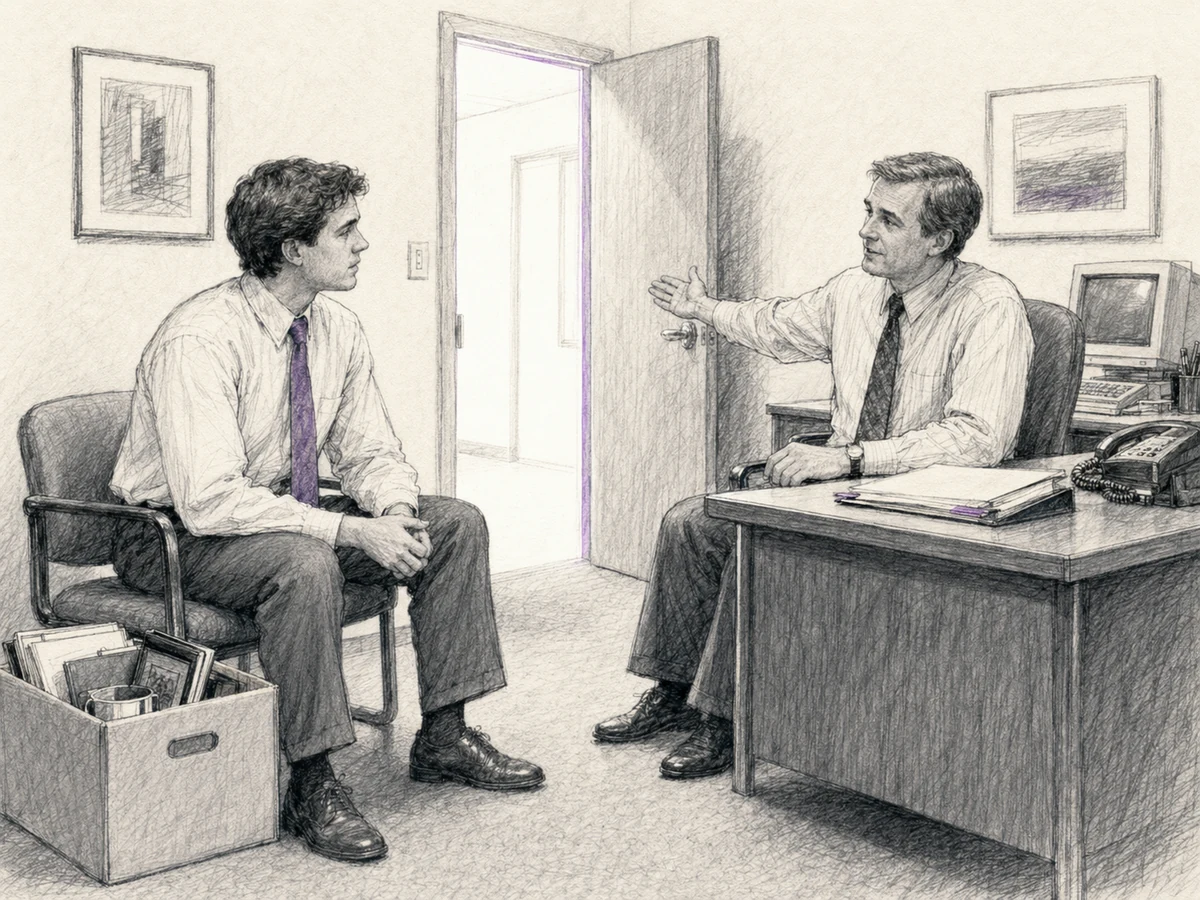
It was one of those lines that sounds wise the second you hear it.
And it is wise, up to a point.
But I think it misled me for years.
It made me feel like every departure needed a polished explanation. Like leaving only counted if I could wrap it in a vision. Like it was respectable to say, “I’m being called toward this next thing,” but less respectable to say the thing that was usually truer:
I cannot keep being this version of myself in this place.
So I worked too hard to manufacture things to run toward.
Not always dishonestly. Sometimes there really was something ahead. But a lot of the time I was building the explanation before anyone asked. The opportunity. The growth. The better fit. The next chapter.
I wanted the story to sound like aspiration instead of refusal.
I wanted to explain myself in a way that made sense to other people, and maybe to me.
But the simpler truth was that I was trying to get away from something that felt wrong.
Something misaligned.
Something that was asking me to accept a life that did not fit.
I am less embarrassed by that now.
Running away is not always cowardice. It is not always confusion. It is not always failure to plan.
Sometimes it is the first honest refusal.
Sometimes it is how a person stays true to himself before he has the words to explain what he is protecting.
I do not think I was built especially well for long-term toleration of what feels false.
That has cost me.
Sometimes I left too soon. Sometimes I mistook restlessness for insight. Sometimes I created motion where what I needed was endurance. I am not trying to turn every exit in my life into an act of courage.
But I am also done pretending every departure was a mistake just because it was messy.
Some of what looked like avoidance from the outside was probably fidelity from the inside.
Those exits stopped the drift toward a life that was becoming unrecognizable as mine.
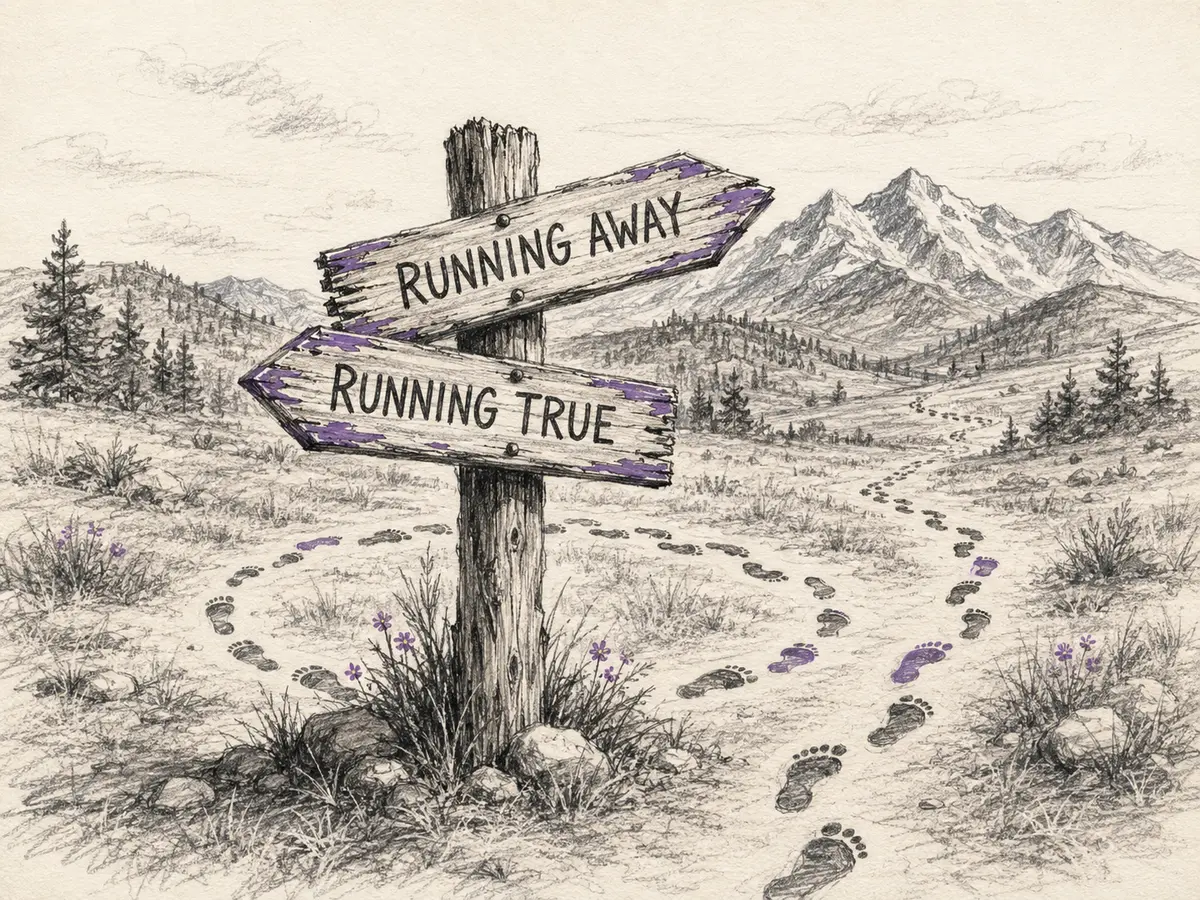
Maybe that is the shape of my life: not a clean march toward one grand vision, but a long uneven mix of running toward and running away.
Running toward partial goods.
Running away from bad fits.
Running toward possibility.
Running away from who I did not want to become.
One of the clearest “toward” moves of my twenties was leaving Chicago. Home, family, friends, all of it clustered there. Then I moved to Colorado.
That move taught me I could create a future in a new place.
Colorado became my real home, even after I wandered away from it a few times. Maybe especially because I wandered away and kept finding my way back.
At sixty, it is tempting to add all of that up against the old private fantasy of what I was supposed to become.
I carried that fantasy longer than I want to admit.
By now, I thought I would have done something grand. Built something bigger. Become someone more impressive. Left a clearer mark.
Then you look around and there you are, still struggling through parts of life you thought would be settled by now.
That hits hard.
But more and more, I think the scoreboard was wrong.
Or at least it is wrong for me now.
The life I have is not the life I envisioned. It is not tidy. It does not resolve into a simple lesson. It is full of flaws, detours, compromises, and regrets.
But it is also the life that gave me these two babies as an old dad.
That was not the future I pictured.
It may be better.
The question is no longer whether my life adds up to something grand in the old sense. The question is whether I can be equal to the life I actually have.
Can I stop measuring myself by what I might still prove?
Can I become the kind of father this part of my life requires?
A great dad.
A present dad.
A long-enough-living dad.
That is not a consolation prize.
That is not lowering the bar.
That is finally understanding the scale that matters.
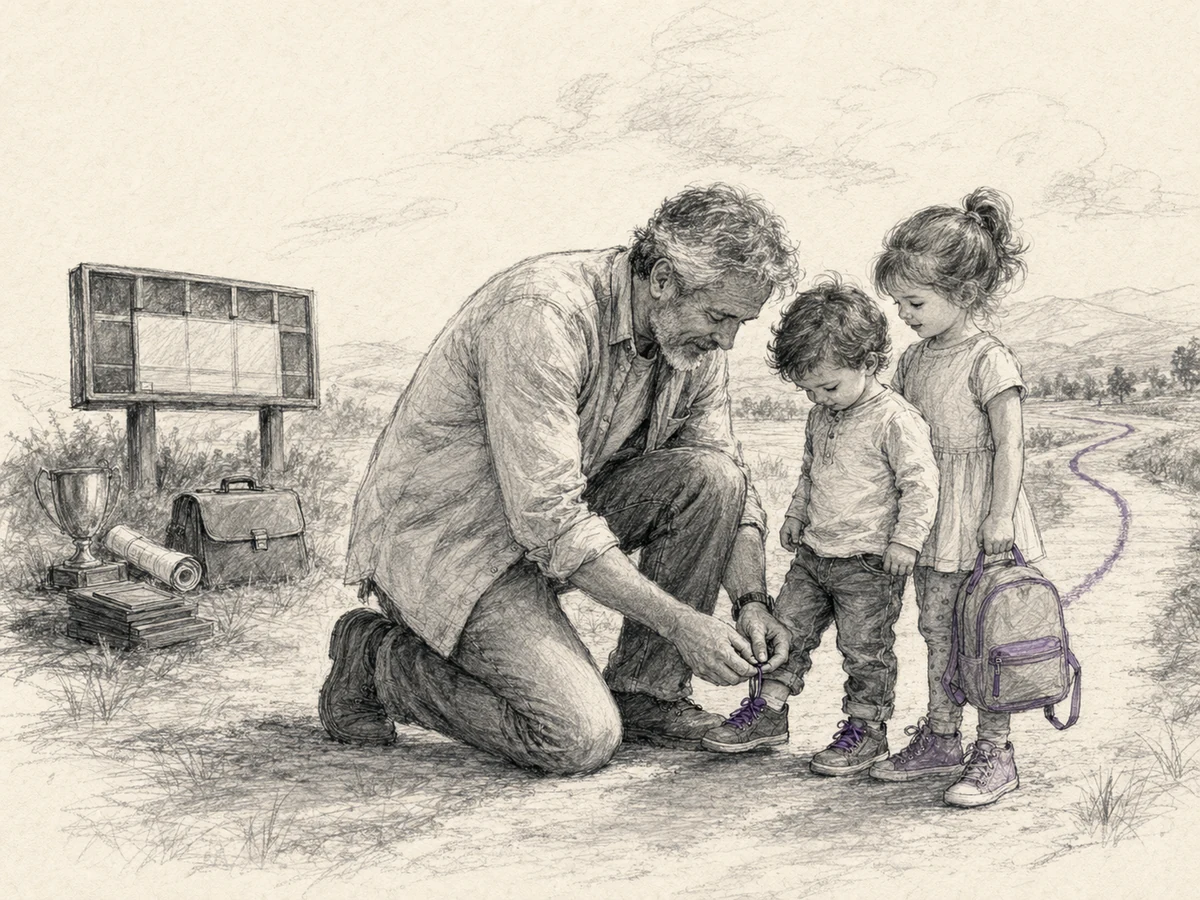
Maybe the story of my life is not that I always knew where to go.
Maybe it is that whenever something started feeling false, I eventually found it harder and harder to stay.
And maybe, through the wrong turns, necessary exits, and the occasional brave move toward something real, that was enough to bring me here.
An old dad, still unfinished, standing in front of the part that matters most.
The work now is not to explain the path.
It is to walk the next part of it well.