Slow Travel: The Mission
An old dad, a seven-year runway, two young kids, and the plan to build a slow-travel life instead of rushing through the world.
I'm an old dad.
At some point you have to stop treating that as a punchline and start treating it as a planning condition.
I'll be retiring in about seven years. My two youngest are 2 and 4 right now. If this works, they'll be around 9 and 11 when we start moving for real — old enough to remember it, old enough to help, and still young enough that the world can get into them before life tries to pour concrete around their feet.
The plan is simple to say and hard to build. I want to slow travel the world with them.
Not vacation. Not a victory lap. Not the kind of travel where you fly in, sprint the landmarks, buy the souvenir, and fly home with a phone full of proof that something technically happened. I want us to live in places long enough that they stop being destinations and start being life.
That's the mission.
What We Mean by Slow Travel
Slow travel doesn't mean we go slow because we're lazy, though I'm old enough now that lazy has a certain appeal.
It means we're not trying to collect countries. We're trying to build a life that moves.
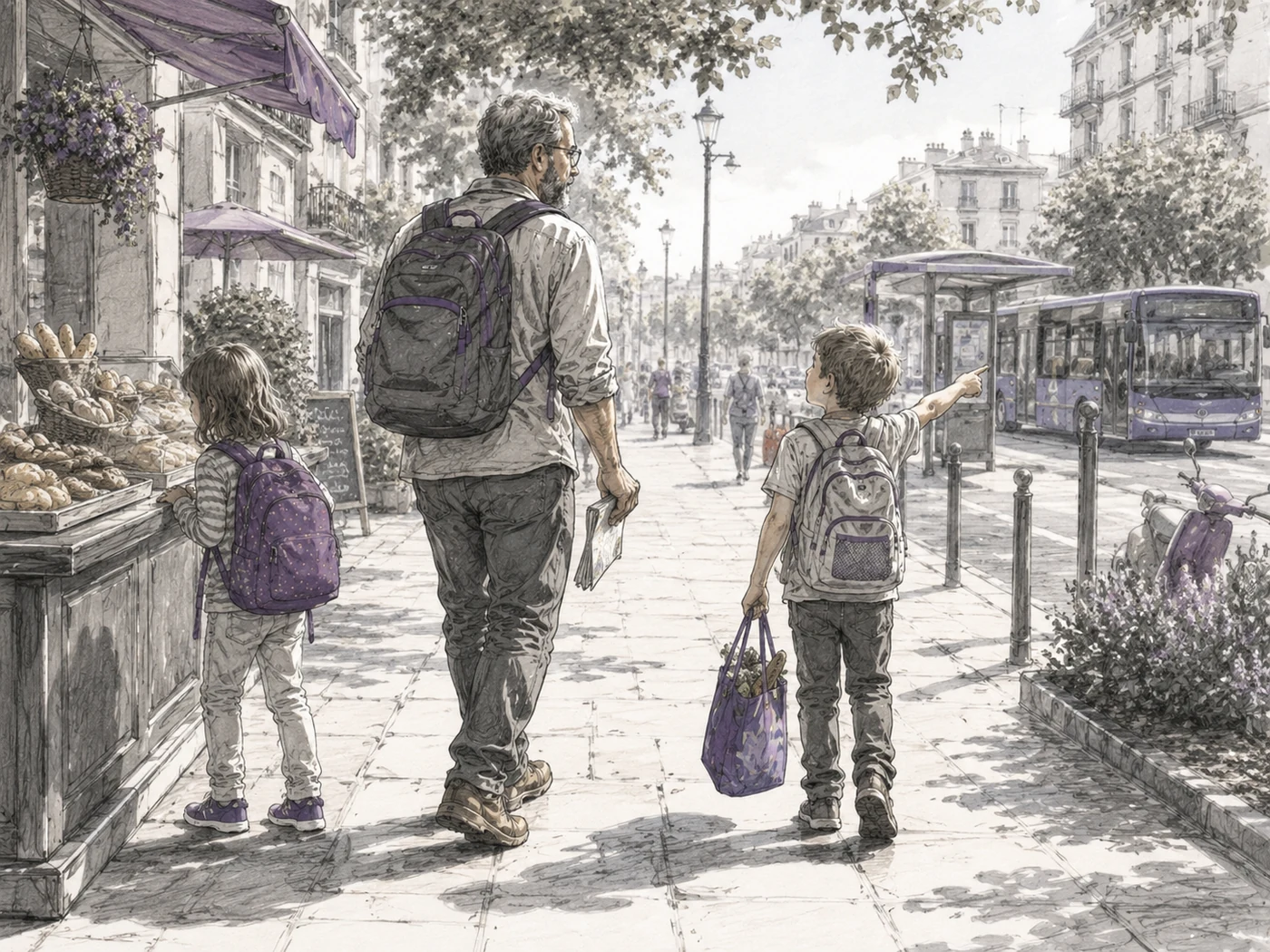
The base version is simple. We stay somewhere long enough to build routines: where the grocery store is, how the laundry works, which park, which library, which bus, which cheap place has food the kids will actually eat. We learn how a neighborhood actually works. What's easy. What's annoying. What's beautiful. What only looked good on YouTube.
Some stops will be shorter, and that's fine. If we're already in a region, we'll take side trips — a week here, a few nights there because it's on the way to somewhere else. I'm not trying to turn this into a religion.
But the foundation is bases, not constant motion. Constant motion is how you turn the world into a checklist and your kids into luggage with opinions.
Why Do This With Kids?
Because childhood is short.
That sounds like something printed on a mug, which makes me want to reject it on principle. It's still true. Childhood is short, my runway is short, and their years with me are shorter than I want to admit.
You don't need a dramatic story to know that. You just have to watch how fast a kid changes sizes.
One day the car seat straps are too tight. One day the shoes don't fit. One day the little voice you thought you'd remember forever is gone, replaced by a bigger one that sounds almost like the same kid but not quite. Nobody rings a bell when that happens. There's no ceremony. You just notice later that some version of your child has disappeared while you were trying to get everyone out the door.
My wife and I raised one set of kids already. I know how fast it goes. I know how easy it is to say “we'll do that later,” and how later turns into a calendar full of dentist appointments, work, bills, broken appliances, and a vague memory of the person you thought you were going to become.
I don't want that this time.
I want these two to see past the narrow default. I want them to hear other languages used for real life instead of on a worksheet. I want them to learn that “ordinary” is local — different systems, different histories, different assumptions about what's normal, all of it worn in somewhere as just the way things are.
That doesn't happen from a tour bus.
It happens when you're somewhere long enough to need a routine.
The Education Part
LifeEducation.org is where we'll track what the kids actually learn.
That doesn't mean dragging school around the world in a suitcase. I have no interest in recreating the worst parts of school with better scenery. The goal is not to sit in Portugal doing worksheets about Portugal while Portugal waits outside.
The goal is a real learning system that travels: reading, writing, math, projects, local history, language, practical skills, plus whatever the place and the kid and the season actually call for. Some of it will be formal, because kids still need foundations. I'm not throwing math into the ocean and calling it freedom.
But the best of it should come from where we are. In Mexico, Spanish stops being a class. In Greece, history stops being a unit. In a country where I can't read the paperwork, bureaucracy becomes a family project whether anyone voted for it or not.
We'll track what works and what doesn't, then change the plan when the theory gets punched in the mouth by real children in real places.
That will happen.
Seven Years Is Build Time, Not Wait Time
Seven years sounds like a lot until you write down what has to be true.
The money has to work. The health insurance has to work. The visas, the housing, the schooling records, the backup plans — all of it has to work. And the kids have to actually thrive, which is the part that keeps the rest of it honest. This can't be my old-man fantasy with two kids dragged along behind it in matching backpacks. If it doesn't work for them, it doesn't work.
So the next seven years aren't waiting time. They're building time.
A dream doesn't become a plan because you keep saying it with confidence.
A dream becomes a plan when it survives constraints.
That's what we're actually building here: a system for choosing places. Not a bucket list. Not “Top 10 Hidden Gems,” written by someone who's clearly never traveled with a tired four-year-old. A system that starts from what our family actually needs and throws out everything that doesn't fit — the beautiful places, the famous ones, the places the internet swears everybody has to move to this year.
Eventually I want to ask it a real question instead of a dreamy one. Not “best places to live abroad.” Something more like: give us twenty places that fit our requirements between May and August — our budget, our kids, our pace, our deal-breakers — and then we compare what's left.
How that system works is the next post.
What This Blog Is For
This isn't going to be a fantasy travel diary.
There'll be some sunsets and some good photos, I hope. There'll also be bad sleep, bad weather, wrong turns, homesickness, money stress, and days where the big cultural win is finding chicken nuggets before everyone falls apart.
That's fine. That's the actual thing.
What I want to document is the build: the planning, the tradeoffs, the test runs, the mistakes, the money, the places that survive the constraints and the places that don't. A public record of how you turn a sentence that sounds ridiculous into a working family system.
Slow travel with two kids. Seven years to build it.
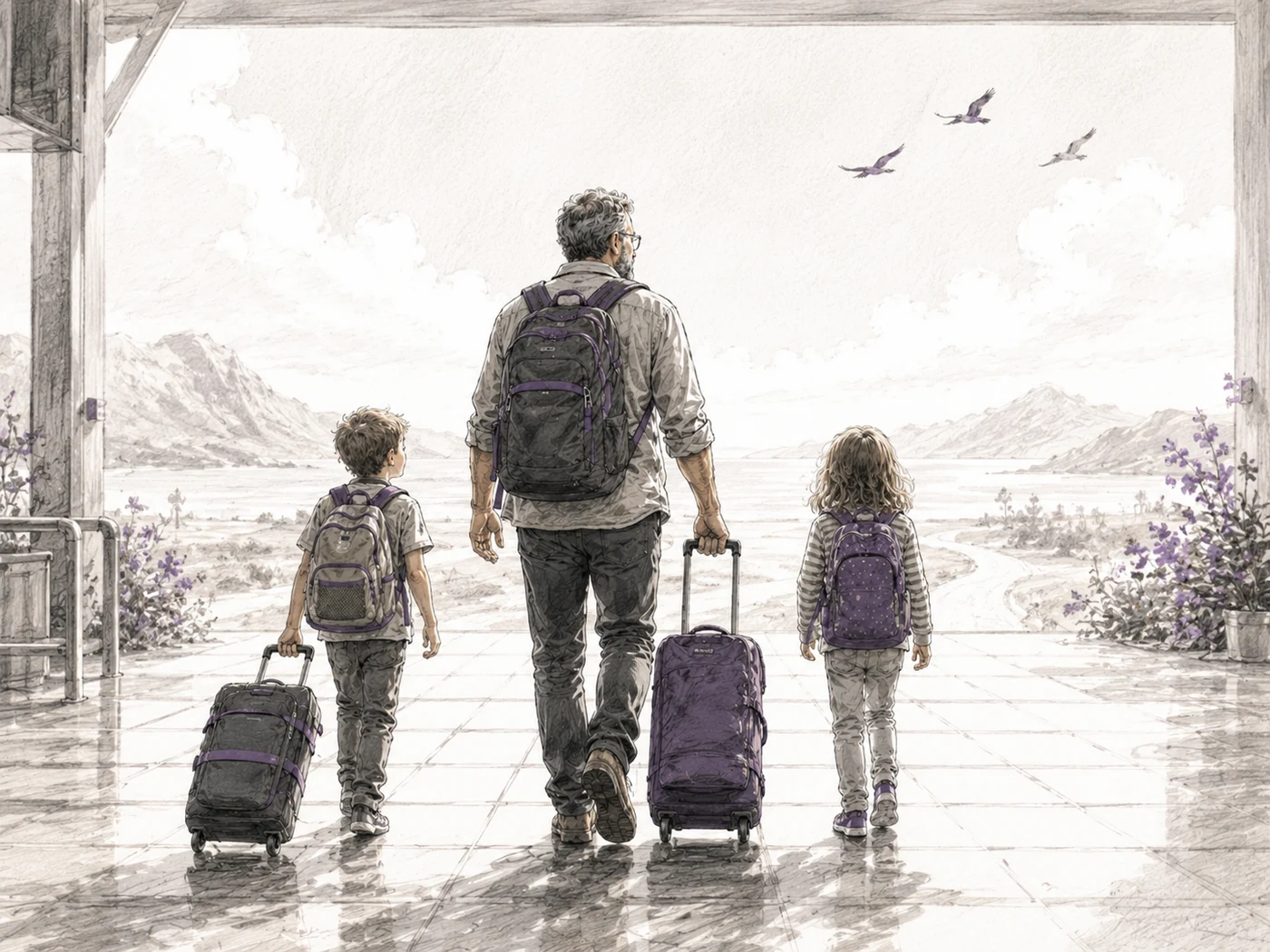
I don't need the whole future figured out right now. I need to build enough of the system that, when the time comes, we can actually go.