Straight Greats No. 4: The Cult — Three Great Reincarnations Before They Fucked It Up
The Cult made three nearly perfect albums by becoming a different band each time—then Kurt slept through their peak from the front row.
STRAIGHT GREATS
THREE STRAIGHT
☠ ☠ ☠ — 3 CERTIFIED
THE CULT
Love · Electric · Sonic Temple
Straight Greats is the series for artists who put together runs of nearly perfect albums, one after another. Some make it to three. A few go further. The point isn’t whether every sane person on earth has to agree. The point is that a run holds up start to finish, album after album, with no dead weight and no charity required.
The Cult might be one of the harder bands to sell this way to somebody who doesn’t already like The Cult. If Ian Astbury’s voice, Billy Duffy’s enormous guitar sound, and the band’s whole leather-pants-shaman-burning-incense thing don’t work for you, three albums probably aren’t going to change that. You have to be at least somewhat predisposed to what they’re doing.
But that’s true of almost every band. If you hate Rush, I’m not going to fix that by playing you three Rush albums instead of one. The real question is what happens once you accept the basic terms. Once you’re willing to enter this particular world, does the run hold up? This one does.
What makes it more impressive is that The Cult didn’t make the same great album three times. They reincarnated themselves three times in a row, and each new version worked.
Then they tried it two more times and fucked it up.
This one gets three certified skulls. No asterisk, no mercy ruling. The Cult may fill out the contact form to claim its badge.
Love
Love is the dark, romantic version of The Cult. It still has one foot in post-punk and gothic rock, although neither label explains the size of the thing. “Rain,” “Phoenix,” and “Revolution” are the songs that immediately stand apart for me. Then there’s “She Sells Sanctuary,” which was one of my all-time favorite songs when I was hearing it in clubs in 1985.
I still love it. I just feel slightly full of shit saying it now. It’s become one of those songs where naming it as a favorite can sound like you’re selecting the approved answer. “Don’t You (Forget About Me)” has become the same kind of song for me. I loved both of them before they hardened into eighties monuments, but saying that now can sound like I’m remembering the cultural importance instead of the actual song.
I’m not. “She Sells Sanctuary” was enormous to me when it was still a club song and not a nostalgia requirement. The guitar comes rushing in, Astbury starts howling over it, and the walls seem to disappear. Even when Love is moody, it isn’t small. The band already sounds like it wants a bigger room.
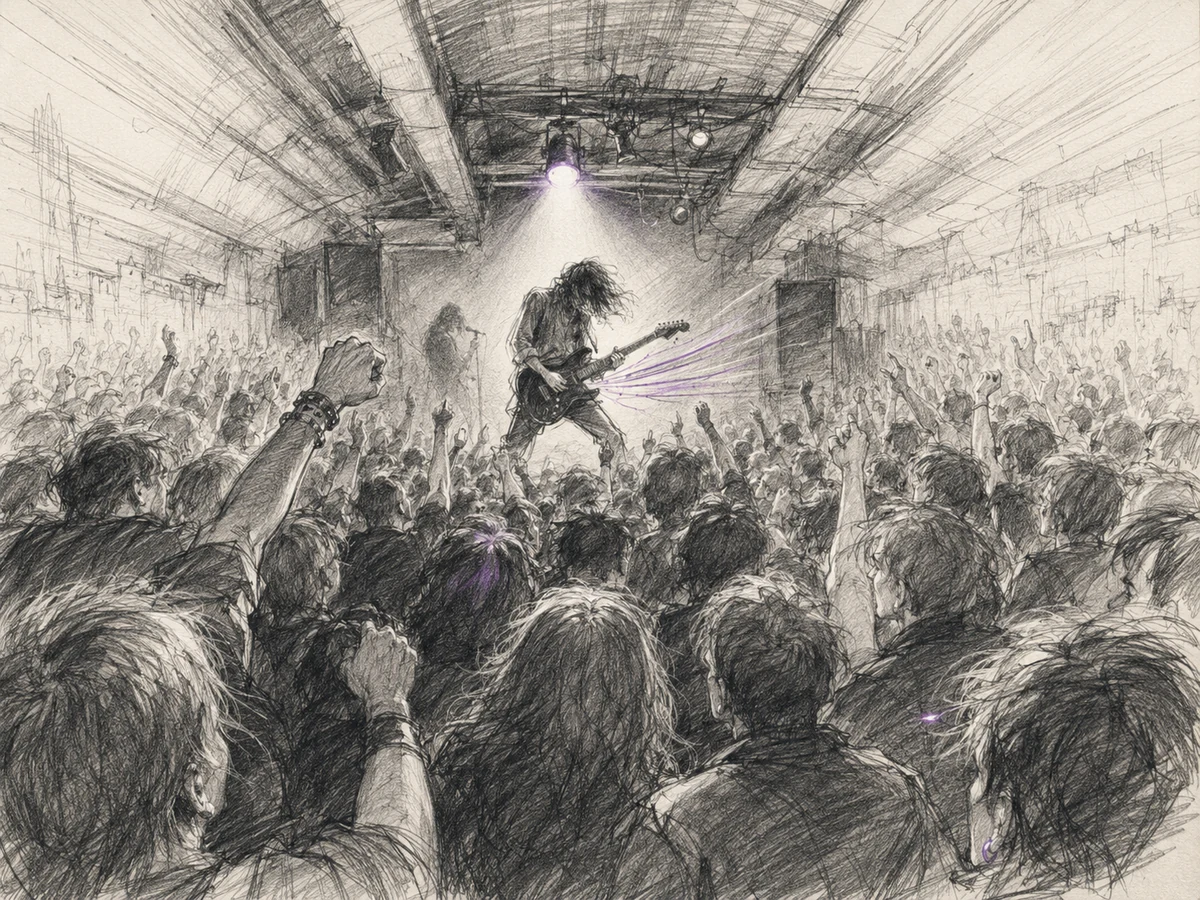
That version of The Cult could’ve kept going. They could’ve made another album with the same shadows, the same echo, and the same mystical sweep.
Instead, they tore it apart.
Electric
Electric sounds like somebody walked into the studio, unplugged half the equipment, and told the band to stop floating around and hit something. The atmosphere didn’t disappear completely, but it stopped being the point. The songs got shorter, harder, and dumber in the best possible way. Billy Duffy’s guitar went from filling the air to knocking holes in it.
“Wild Flower” and “Love Removal Machine” are the obvious landmarks for me. Beyond those, I don’t always carry the individual song titles around in my head. I can look at the track list and not immediately hear every song.
Then the album starts.
“Peace Dog” comes on, or one of the others starts kicking, and I remember all of it. The songs return as soon as they’re moving. The album is less a collection of titles I can recite than one sustained crazy trip full of swagger, noise, and chaos. That’s part of why it works. Electric isn’t an album I admire from a distance. It has to be playing, and once it starts it pulls me straight back into it.
A lot of bands can’t survive this kind of turn. Their audience wants the old record again, or the new sound exposes that the songs weren’t strong enough without the original production around them. The Cult survived it easily, and then they changed again.
Sonic Temple
Sonic Temple took the force of Electric and made it enormous. This was The Cult built for arenas: bigger production, bigger choruses, bigger videos, bigger hair, bigger everything. “Fire Woman” was unavoidable. “Edie,” “Sun King,” “Sweet Soul Sister,” “American Horse,” and the rest gave the album enough range that it didn’t feel like one giant song repeated across two sides.
I love the whole thing. It was one of my favorite albums of 1989, and 1989 had a lot of contenders. This wasn’t a record with two singles carrying a pile of acceptable material behind them. For me, the whole album was the event. It could’ve turned into glossy late-eighties sludge — plenty of records did. Instead it sounded like the fully inflated version of everything The Cult had been working toward.
That album was huge during the summer of 1989, at least in the world I was living in. The Cult felt like they were holding their own with Cinderella and Bon Jovi, even though those bands were further along as mainstream arena acts. I was living in Minneapolis and working for Arthur Andersen. I saw Cinderella at the Met Center. I saw Bon Jovi there. I saw the Grateful Dead. I saw New Order with Public Image Ltd. and the Sugarcubes. I saw 10,000 Maniacs the night after Cinderella and spent much of the show falling asleep in front of what may or may not have been a date. And I saw The Cult.
Apparently, I also saw Metallica.
The Metallica Concert I Don’t Remember
The concert records are very clear about what supposedly happened that night. On June 10, 1989, The Cult opened for Metallica at the Met Center in Bloomington.
I remember The Cult. I remember the people I was with, and I remember it as a strong show. Sonic Temple was so big that summer that The Cult doesn’t live in my memory as anybody’s opening act.
Except that seven months later I watched them headline the Aragon Ballroom in Chicago, and the Aragon is a ballroom, not an arena. A band playing a room that size in January 1990 wasn’t filling the Met Center on its own name in June 1989. The billing is the one part of that night that makes perfect sense. My memory is the part that doesn’t.
Metallica has completely vanished.
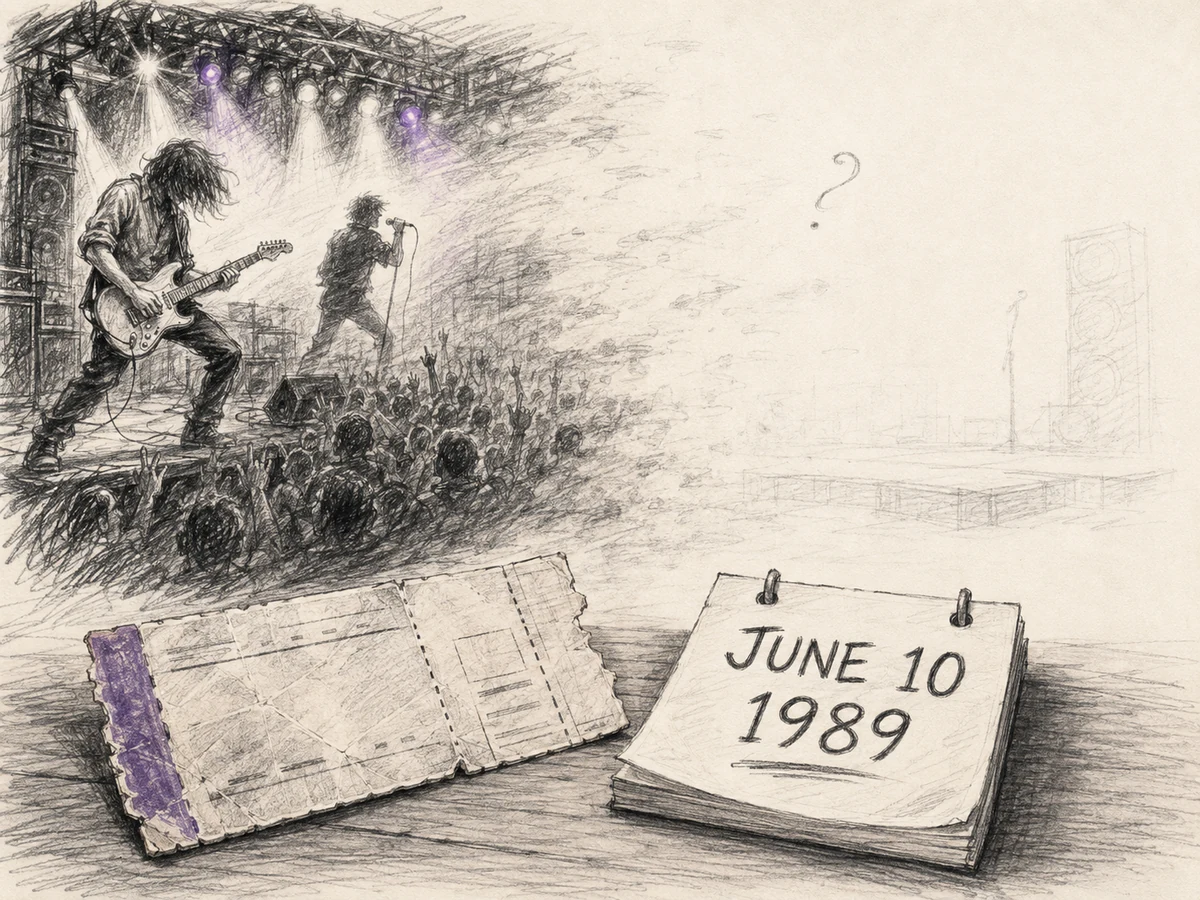
According to the records, they came out afterward and played a full Damaged Justice show: seventeen songs, multiple encores, “Blackened,” “For Whom the Bell Tolls,” “One,” “Master of Puppets,” “Battery,” and the rest.
I remember none of it.
Maybe I never actually went. I remember going, but I might just remember thinking about going, and the Cult memory attached itself to a date where everything else fits. Maybe we watched The Cult and then took off for a party or to chase some girl. Maybe I stayed for Metallica and was so fucked up that the entire thing disappeared. Any one of those sounds exactly like something I might’ve done in 1989.
I could probably chase it down. But I don’t know anyone from back then who went, and I wouldn’t know how to find them if I did.
The rest of that Minneapolis timeline checks out almost perfectly, right down to sleepy Natalie Merchant. Everything else lined up. Only Metallica is missing, which is the strange part, because I’m not somebody who misplaces a whole arena show.
I don’t know what the fuck happened.
The Front Row
By January 1990, I was back in Chicago. I’d left Arthur Andersen and started with a smaller local consulting firm, and the new company put us through another training program, this time at an office in Oak Brook. It was my second chance to act like the serious young business professional these companies apparently thought they were hiring.
We spent much of the training screwing around in the back conference rooms. There was a phone connected to the office system, so we’d call the front desk pretending to be from a client’s office and ask them to page somebody who was supposedly visiting the building. Ben Dover. Frank Furter. Whatever else a group of supposedly educated adults could come up with while hiding in a conference room and trying not to laugh.
One of the people in the training cohort was Kurt. He worked out of the San Francisco office and had been brought to the Chicago area for the same training, so he was already there with the rest of us, being put up locally by the company. I never saw him again outside those weeks, but he came to The Cult concert with my friend Ted and me.
The show was at the Aragon on January 19, 1990. Bonham and Dangerous Toys played first. We started somewhere around the seventh row, but at some point we noticed the front row had opened up.
So we moved.
That show was fucking amazing.
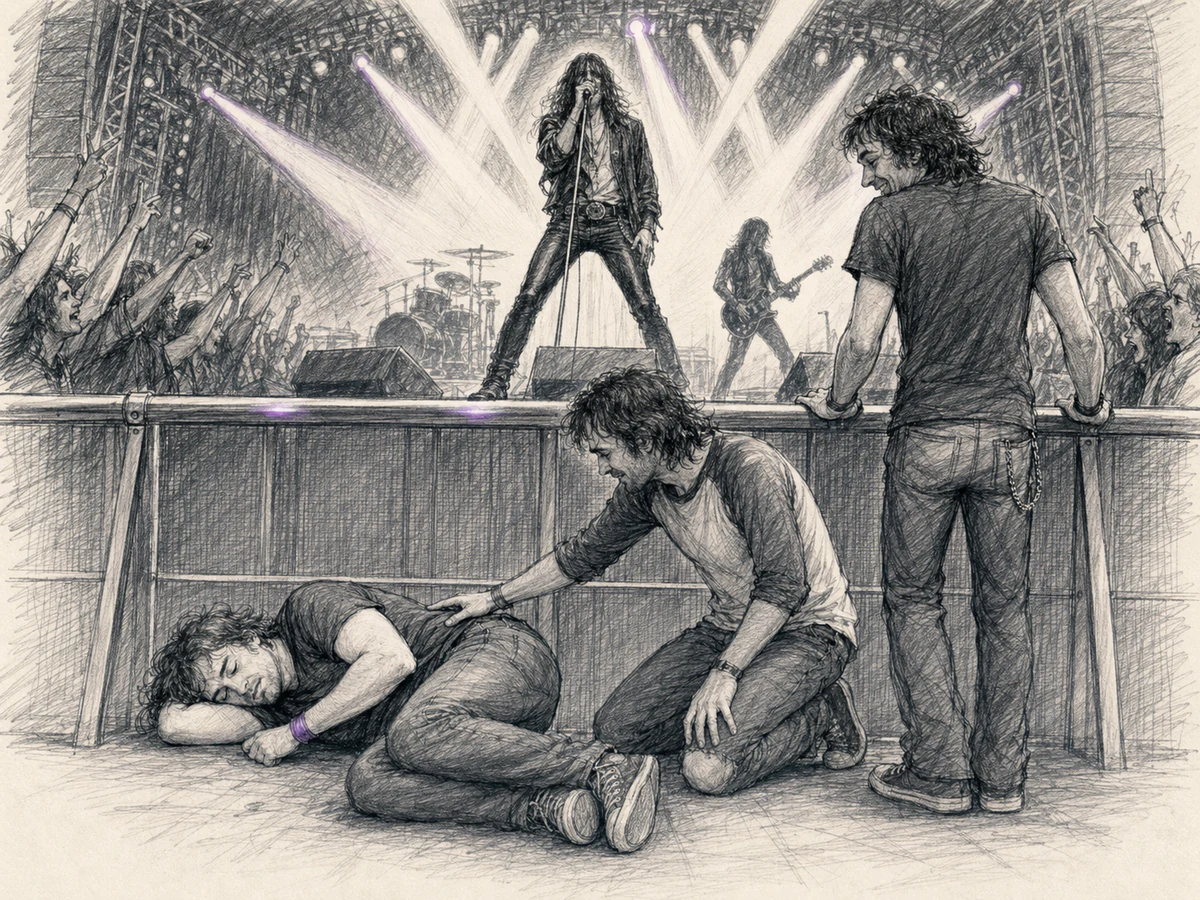
By the time The Cult came on we were directly in front of the stage, and Ian Astbury was huge. Not just famous or charismatic, but physically imposing from that close, towering over the room. The band wasn’t asking the audience to participate. It was dragging everybody with it. The whole show felt like it might come apart from the energy. This wasn’t a band explaining how important it was. It didn’t have to. The crowd was already gone.
They played songs from all three albums: “Rain,” “She Sells Sanctuary,” “Wild Flower,” “Love Removal Machine,” “Fire Woman,” “Edie,” “Sun King,” and the rest of the run that had carried them into that room. It was the three reincarnations joined together on one stage, and they all belonged.
Kurt missed almost all of it. He got so drunk that he passed out in the front row and slept through The Cult’s entire set. Ted and I periodically made sure he was still breathing, but otherwise we left him lying there while the show exploded above him. He’d come from the San Francisco office, survived our professional training program, and reached the front row for The Cult at its absolute peak.
Then he used it as a bed.
After the Cliff
The next time I saw The Cult was at the Paramount Theatre in Denver on March 1, 1995. Very different room, very different band.
After Sonic Temple, they made Ceremony. Then they made the self-titled album in 1994. Neither new version worked the way the first three had, and that’s the real dividing line in this run. The first three records aren’t just three strong albums. They’re three successful reincarnations: the dark romantic one, the stripped-down blunt-force one, and the gigantic arena one. Then came versions four and five.
Ceremony felt less like another reincarnation than an attempt to keep the Sonic Temple machine running after it had started losing pressure. The self-titled record made a harder turn, but neither one became a version of The Cult I needed the way I’d needed the first three. The band went from videos, singles, and songs everywhere to almost nothing. It felt sudden. One minute they were one of the biggest bands in my musical world, and then they’d dropped off a cliff.
I was still excited to see them in Denver. We were drinking, and I was ready to believe that once the band walked onstage the old force would come back. Instead, the show had an edge of resentment to it. The band didn’t seem satisfied with the response it was getting. The theater wasn’t built for the kind of jumping, packed-together chaos of the Aragon, and the audience wasn’t reacting like the crowd I’d seen five years earlier. The Cult seemed to take that personally.
They didn’t actually say, “Don’t you people know who we are?”
That was the feeling.
They were pushing against the audience, almost fighting with us because we weren’t giving them enough. I remember thinking they were yelling at the wrong people. We were the ones who had still shown up. And maybe the room wasn’t going wild because this version of the band wasn’t making it go wild.
I’d seen what happened when The Cult didn’t have to demand a reaction. Five years earlier, they just walked onstage and caused one.
What do you think? Did The Cult earn the clean sweep, or is there another album we should have included? Let us know through the contact page.
Playlist
YouTube Music: Listen to the playlist
YouTube: Watch the playlist