The Math Isn't Good
I got the miracle. They get the math. That is not an even trade.
I read an article by a woman whose father had her late. She was about thirty-five. He was around sixty when she was born.
When she was in kindergarten, she was embarrassed by him. She begged him not to come into the classroom because he looked old. Not mean. Not absent. Not bad. Just old.
She said he was a great dad.
That was the part that made it worse.
The complaint wasn’t that he failed her. It was that the whole arrangement was unfair from the start. She felt cheated. By the time she was old enough to fully understand what she was losing, he was dying and barely there. She was angry about that too.
I wanted to argue with her. That was my first move. Get defensive. Build the case. Tell her she was lucky to have a father who showed up at all, that plenty of people get younger fathers who are useless, cruel, gone, drunk, or dead in a different way.
Then my brain went lower, which is where it likes to go when it feels cornered. Well, maybe don’t wait until thirty-five to get married and then blame your old dad for dying.
That lasted about twelve seconds.
Then I knew why I was mad.
Because she wasn’t talking about her dad. She was talking about me.

Not literally. She doesn’t know me. She wasn’t writing about my life, my kids, my house, or my math. But she was close enough to hit the bruise.
I am the old dad.
I used to get away with it better. For a while I could pass as a surprisingly young-looking old dad. Not a young dad—no one ever mistook me for that. But shaved head, tattoos, moving fast, enough energy to bluff my way past the math.
Then somewhere along the way I went with a Unabomber approach to fashion and personal care, and now I don’t look like a surprisingly young-looking old dad.
I look like Grandpa showed up with the kids.
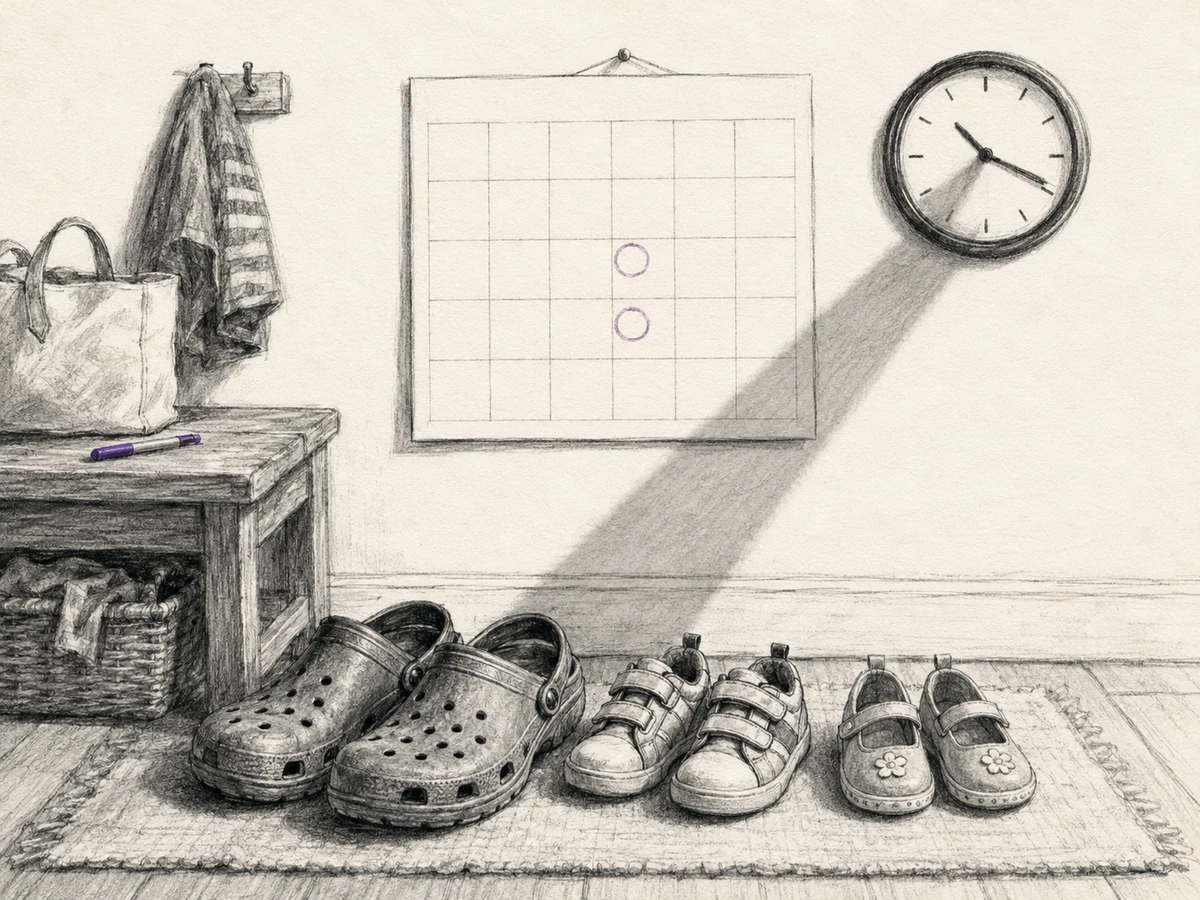
White beard. Hoodie. Crocs nearby. A general sense that I might be able to fix a lawnmower but probably shouldn’t be trusted with sunscreen.
And I know people notice. They may not say it—most people are polite enough to do their math silently—but they’re doing it.
When I retire at sixty-eight, my youngest will be nine. His sister will be eleven. When I’m seventy-five, they’ll be sixteen and eighteen.
When their older sister was born, I was already worried about being an old dad. That seems almost funny now. She’s thirteen and fifteen years older than her younger siblings. I was doing old-dad math even then, back in the easy part of the chart.
This is the math now.
And the math isn’t good. Not hopeless. Not tragic by itself. But not good.
It would be easier to write this if I could turn it into one of those pieces where the old dad discovers that age is just a number, love conquers everything, and the kids don’t care because they only see the heart.
That is bullshit.
Age is not just a number. Age is knees. Age is sleep. Age is recovery time. Age is the way your back feels after sitting on the floor too long. Age is playing with your kids and then needing a chair, a couch, a wall, or one of those little plastic toy kitchens to haul yourself upright again.
I can still run. I can still play. I can still swim and hike and wrestle and carry the bags and do the all-day summer thing.
And we will. We’ll be out all summer. Parks. Pools. Libraries. Trails. Weird little local things. Long days where the kids end up sunburned and dirty and hungry and mad about leaving. I am not the imaginary corpse from the comment section, sitting in a recliner yelling for someone to bring me the remote.

I’m also not clueless. Teaching elementary through high school has kept me around kids long enough to know what they talk about, what they laugh at, what they pretend not to care about, and how fast the ground shifts under them. I am not cool. That ship exploded in the harbor. But I’m not sealed in amber either.
Still, I’m racing time. That’s the part I can’t cute up.
The comments under the article were brutal. A lot of people were against the whole thing—especially older fathers. In their version, the old dad is already half gone. Too tired to play. Too stiff to run. Too out of touch to know what the kid needs. A grandfather who made one more kid and called it love.
I hate how simple that version is. I also hate that it isn’t completely wrong.
That’s the problem with the comments you want to dismiss. Sometimes they’re stupid and cruel and written by people who’d be unbearable at a dinner table. And sometimes, under all that, there’s a point.
Having kids late is a bargain the parent gets to make before the kid can object.
I got the miracle. They get the math. That is not an even trade.
The other day I told Raven she had an old dad.
She said, “No, you’re my dad.”
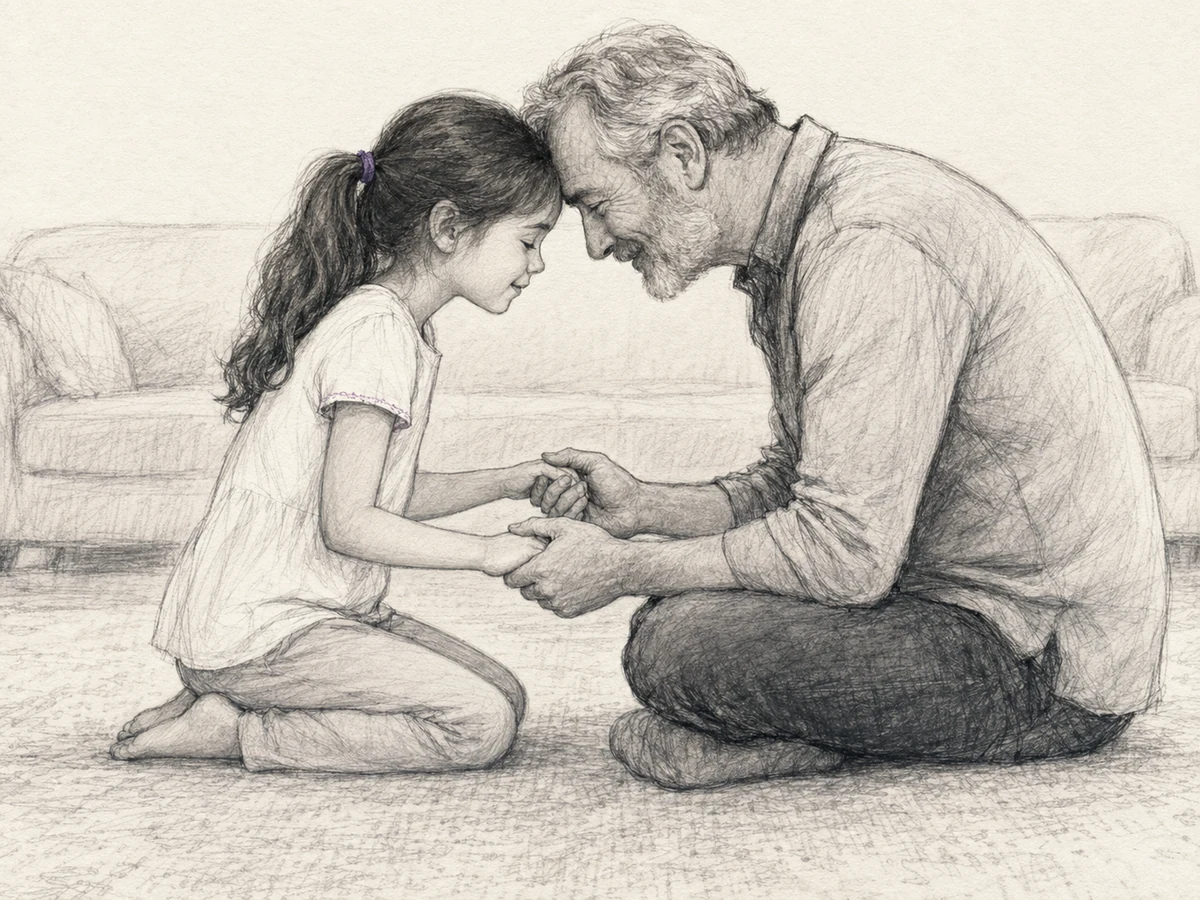
That’s a perfect little-kid answer. It’s also temporary.
Right now I’m not a category to her. Not old dad, weird dad, embarrassing dad, grandpa dad. Just Dad. The one who drives. The one who makes the food. The one who explains things. The one who lies down on the floor even when getting back up is its own separate project.
But she’s little. In a couple of years she may see what other people see. She may start doing the math too. She may ask me not to come in. She may want me to wait in the car. She may still love me and also wish I looked like the other dads.
Both things can be true. Love does not erase embarrassment. Gratitude does not erase loss. A good father can still come with a cost.
I don’t want my kids to feel cheated. But they might. I don’t want them sitting somewhere at thirty-five, writing about how their dad was good but old, and how those two facts kept crashing into each other. But they might.
And if they do, I don’t get to show up in the comments and argue my side.
I chose this. They didn’t.
That doesn’t mean I regret them. I don’t. Not even close. I would not trade being their dad for the world.
Quite literally, for the world. Five thousand dollars, maybe. Depends on the day. Depends how long Alexander has been making that noise.
But not the world.
What a deal for me. I got the babies. I got the second round. I got the small hand in mine, the ridiculous questions from the back seat, the bedtime delay tactics. I got to be loved like a dad when I was old enough to understand what that actually means.
They won’t see the bargain the same way. They don’t get my side of it. They get theirs. They get the old dad at kindergarten. The old dad at graduation. The old dad at whatever age my body starts collecting bills I can’t charm my way out of. They get the risk that the father who loved them hard may leave them early.
The article hurt because it told the truth from the kid’s side.
I can argue with the tone. I can argue with the comments. I can argue with the people who picture me as some decrepit fool who can’t throw a ball or chase a kid across a park.
But I can’t argue with the calendar.
The calendar is undefeated.
So I do the only thing the calendar leaves me. Be their dad now, all the way, while they still say, “No, you’re my dad,” and mean it as the whole answer. And get serious about staying in the room. Strength, sleep, food—the boring stuff that decides whether seventy-five is a father chasing them through a park or a warning story in an article.
Loving them more than anything is true. It is not a fitness plan.
For now, Raven’s answer is still the whole answer. I’m her dad.
So I get down on the floor.
And when it’s time to stand up, I use the toy kitchen.
If you grew up with an older parent—or became one yourself—what does the math look like from your side? Let us know through the contact page.